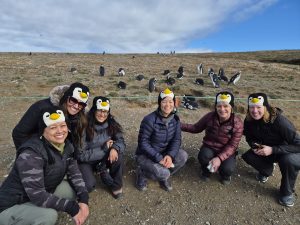
Patagonia has been on my bucket list for years, and this March, that dream finally becomes a reality. After more than a year of planning, the six of us travel to Patagonia in March 2026, ready for an unforgettable adventure. Our journey begins in Chile, with stops in Punta Arenas, Magdalena Island, and Torres del Paine. From there, we cross into Argentina to visit El Calafate and witness the breathtaking Perito Moreno Glacier in Los Glaciares National Park. Day nine is the absolute highlight of the trip: Mini Trekking on the Perito Moreno Glacier.
The best and most beautiful things in the world cannot be seen or even touched. They must be felt with the heart – Helen Keller








Journey to Los Glaciares National Park
We’re picked up from our hotel in El Calafate at 8:00 a.m. The drive to the entrance of Los Glaciares National Park takes about an hour, followed by another 30 minutes to the boat launch.
Along the way, we start spotting the first chunks of ice drifting in the river and the jagged mountain peaks in the distance—the same range we saw from the other side in Torres del Paine National Park. Then, suddenly, our first glimpse of the Perito Moreno Glacier appears from the bus window. It’s breathtaking.


On the Water
At the dock, several boats are waiting. We board ours and, once we leave, head straight outside. As we approach the glacier, more and more icebergs appear—floating sculptures in shades of blue and white.
The glacier wall grows taller and more dramatic with every passing minute. At up to 70 meters high, it dwarfs the boats below, making them look like toys.


First Impressions
This year, the glacier has been especially active. As we get closer, we hear a deep rumbling—like distant thunder. It’s the sound of ice shifting, cracking, and breaking off into the lake.
The scale is hard to grasp. Perito Moreno Glacier is part of the Southern Patagonian Ice Field, the third-largest ice mass in the world after Antarctica and Greenland. The ice field spans both Chile (about 80%) and Argentina (about 20%).
The glacier itself stretches 66 kilometers. It’s often compared in size to a city like Buenos Aires—or roughly twice the size of Paris. No photo really captures its immensity.


Onto the Glacier
Most boats approach the glacier wall and return, but we’ve signed up for a mini-trek. Our boat docks at a smaller landing to the side of the glacier, where we disembark.

We leave our backpacks behind in the boat dock building, keeping only hats and gloves. Despite the sunshine, a cold wind cuts through the air.
After a short briefing, we follow our guides to a small beach, then climb over rocks to a viewpoint with incredible glacier views. We pause to take photos—and to touch the ice-cold water. It’s freezing in a way that feels almost surreal.


Walking on Ice
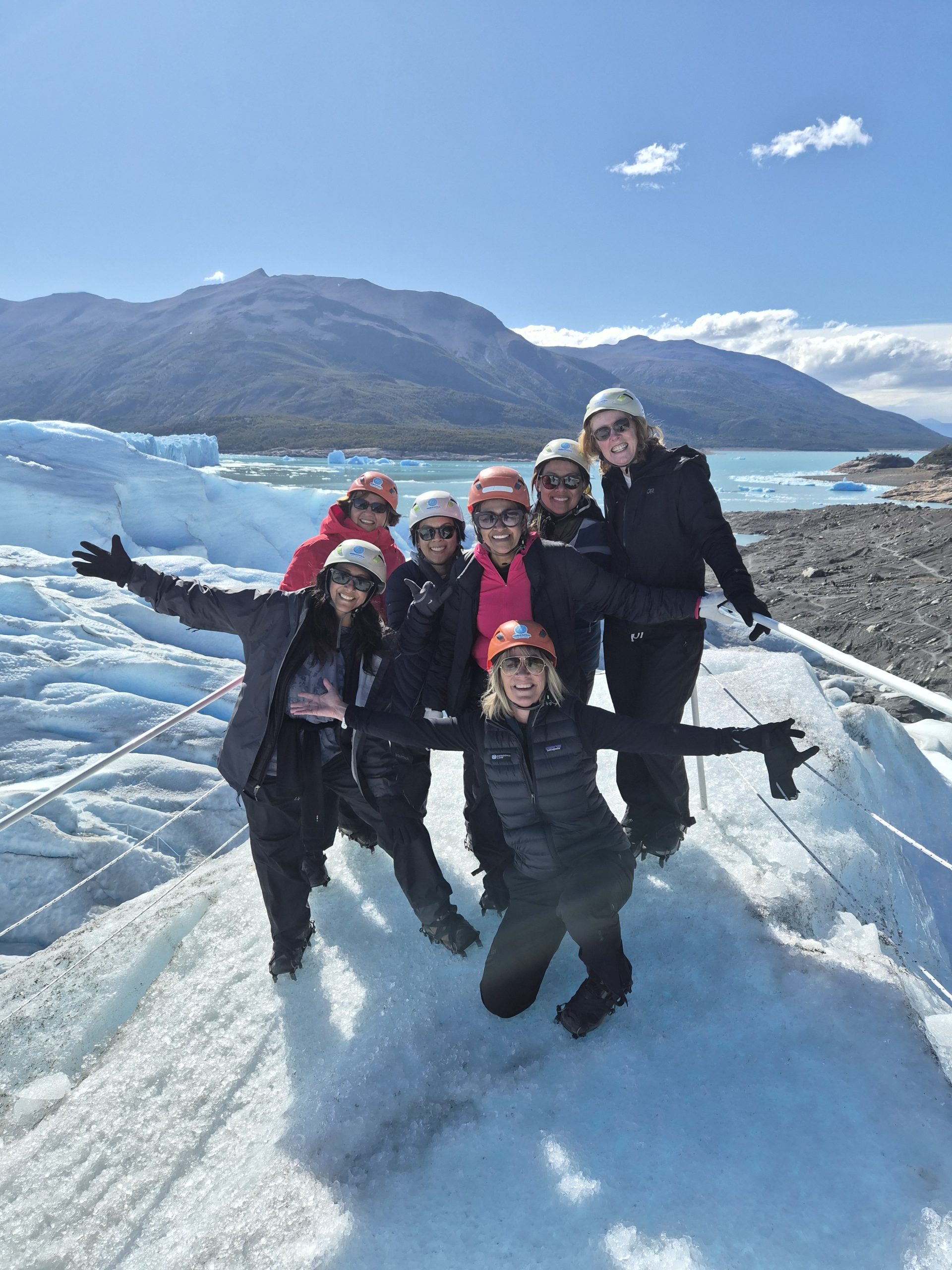
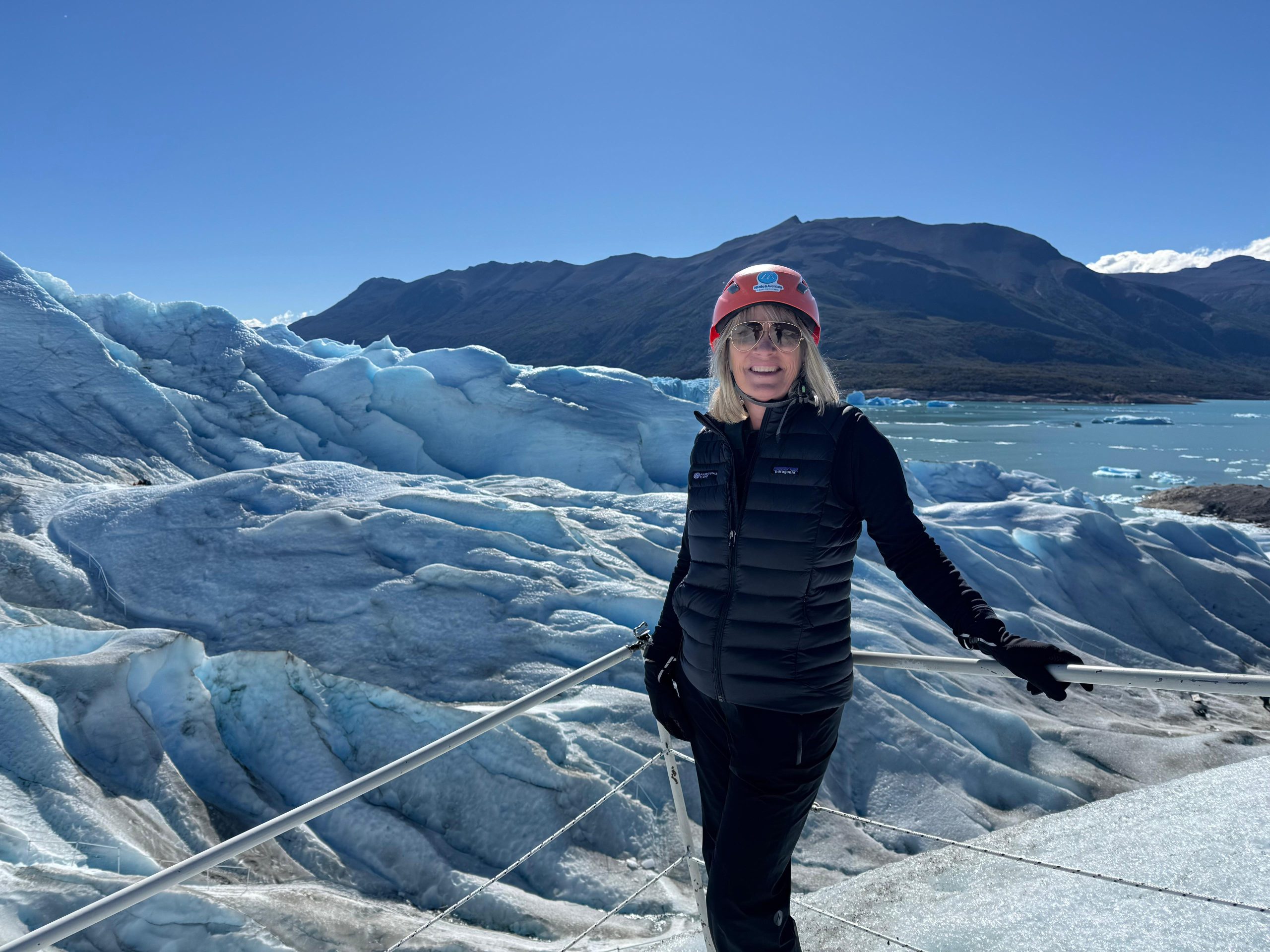
At a nearby hut, we’re fitted with helmets and crampons—heavier and sturdier than the ones we used in Iceland. Fully geared up, we follow our guide, Nicolás, toward the glacier.
Then comes the moment: we step onto the ice.
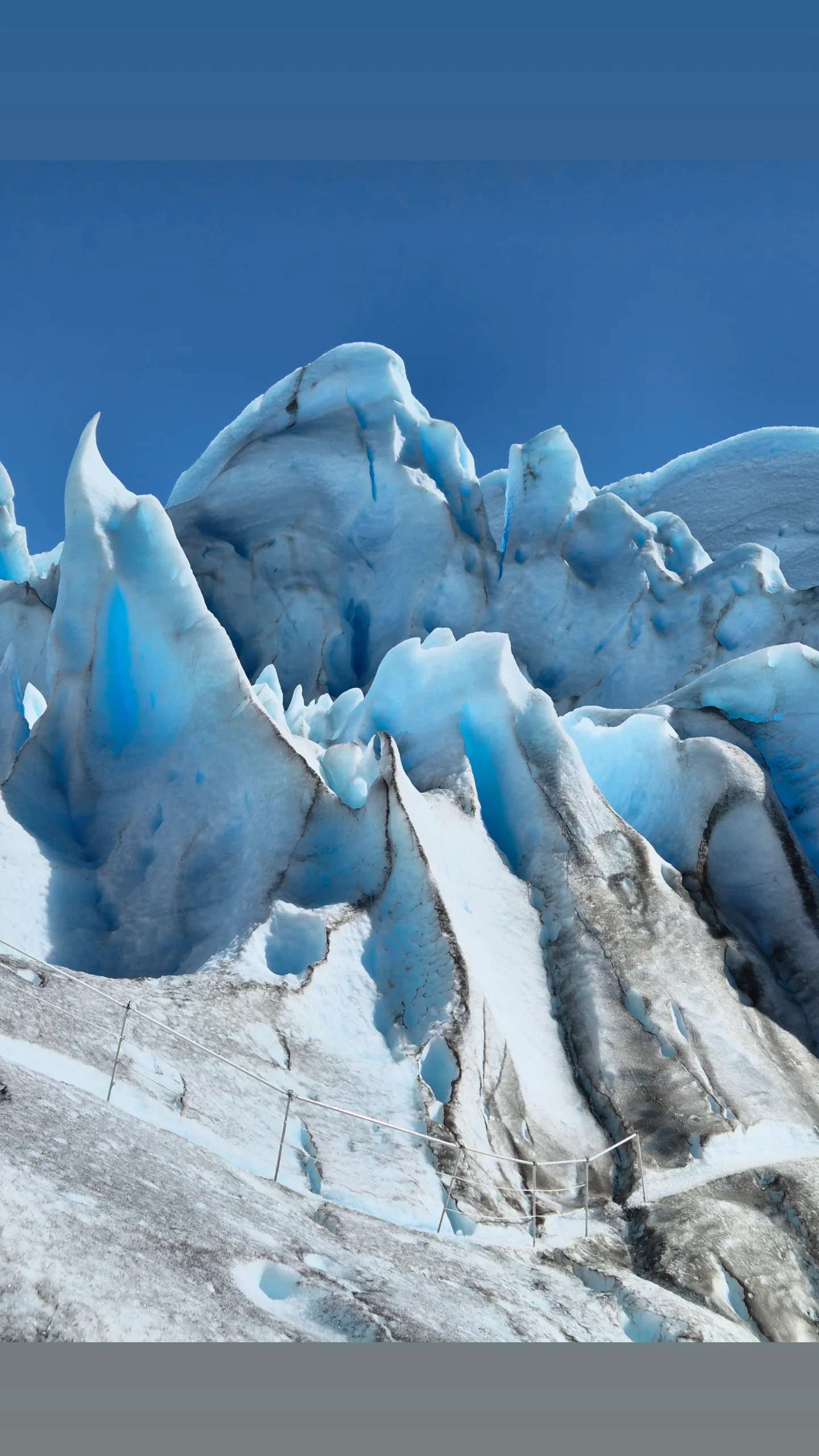
We climb along a carved path, turning back occasionally to admire the jagged ice formations behind us—like an army of frozen peaks marching toward the lake. Up close, the textures and colors are incredible.


At the top, we wait briefly as another group finishes their photos. Luckily, being on one of the earlier boats means it’s not too crowded yet.


As we continue, the trail descends. Nicolás encourages us to drink from a small meltwater stream— It is ice-cold (no pun intended) and unbelievably fresh.
Near the end, we’re treated to a surprise: a whiskey tasting on the glacier. Nicolás drops chunks of ancient glacier ice into our glasses and pours the whiskey. Paired with a local Bon o Bon chocolate, it’s a memorable (and delicious) moment.


We descend via a wooden walkway back to the starting point, with time to enjoy lunch outside, soaking in one last view of the glacier before boarding our boat back.
Moving an Iceberg
Shortly after departure, our boat suddenly slows and begins to reverse. Confused, we soon realize what’s happening: a large chunk of ice has drifted in front of the dock, blocking another boat from leaving.
Our captain nudges us toward the iceberg. Crew members secure a rope and attempt to tow it away—but the rope quickly slices through part of the ice.
After a few failed attempts, the captain uses the boat itself to gently push the iceberg aside, creating just enough space for the other boat to pass. It’s a fascinating reminder that out here, the ice is always moving—and always in charge.
A Changing Landscape
We learn that the glacier has receded more in the past 20 years than in the previous century. At this rate, experts believe trekking on the glacier may only be possible for a few more years. Once it separates from the peninsula, access would require helicopters—similar to experiences in places like New Zealand.
It’s a powerful—and sobering—way to end the trek, knowing that in the future, people will not be able to have this experience.
Final Stop
Back at the bus, we continue our trip. The next stop is at the north side of the Glacier. There is a nice walkway that shows the other side of the glacier. We take more pictures, before we return to Calafate. We end the day with a nice dinner at Rustico Asador Y Parrilla.


The next morning I have a final glimpse of Lake Argentina and Patagonia from the plane. I know I will be back for more hiking in Los Glaciares National Park.


All Photo Credit Liane Aihara, Tricia Jagt, Bina Motiram, Seem O'Dwyer, Maureen O'Gorman, Mariel van Tatenhove