My first trip to Sevilla last January didn’t go as planned. We got food poisoning on the first night and barely saw anything. So when my sister told me she’d be there for a couple of days while I was visiting Portugal, it felt like the perfect do-over.
Sevilla is only a two-hour drive from my house in the Algarve. It is time to explore Sevilla again and eat, wander, and repeat.












The Drive Over
On a Thursday morning, I hop in my rental car and leave Fuseta, passing through Moncarapacho — where we stayed two years ago while house-hunting in the Algarve for the first time — before reaching the A22. From there it’s a straight shot to the Spanish border. There’s barely any traffic, and within an hour I reach the bridge over the Guadiana River, the natural boundary between Portugal and Spain. Less than two hours after leaving Fuseta, I pull into the parking garage of the AC Hotel Ciudad. The location is ideal: just outside the old town, next to the University Hospital, and a 15-minute walk to Plaza España.
Old Town, First Impressions
My sister is still on her way from Córdoba, so I decide to walk to the old town and start exploring. I reach Plaza España first — it’s a Thursday and not too crowded. I’d already visited with Mandi back in January, but it’s always worth another look. Built for the 1929 World Expo, I think it’s one of the most beautiful buildings in Sevilla.
From there I pass the Universidad de Sevilla. Catching snippets from a passing tour group, I learn it was originally the Royal Tobacco Factory, built in 1728. Next I pass the Alcázar but don’t stop — I have a tour booked for Saturday morning.
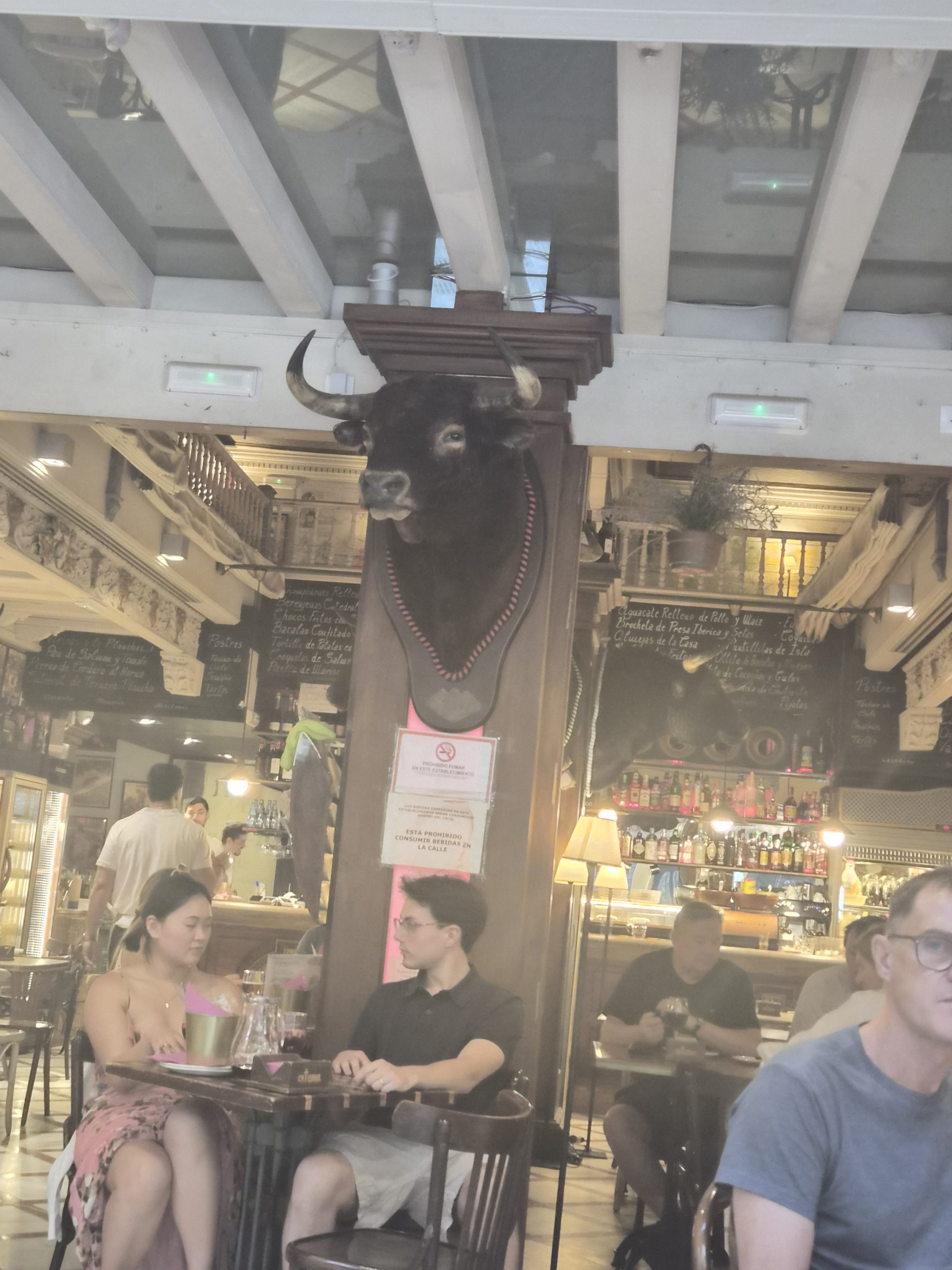
First, I do a little shopping before meeting my sister and brother-in-law. Then I find a tapas bar called Antigüedades near the Cathedral for a drink and some appetizers. Just when I take a first sip of my Aperol Spritz and a first bite of jamón ibérico, Monique and Jos arrive. Our Eat, Wander, Repeat adventure in Sevilla has officially begun.


Dinner under the cathedral’s lights
After drinks, we head back to our respective hotels. They’re staying in the old town; I walk back to the AC Ciudad, already racking up the steps. Back at the hotel, I get stuck in the elevator — not great, sitting in the dark and the heat for 50 minutes until someone finally manages to pry the door open.
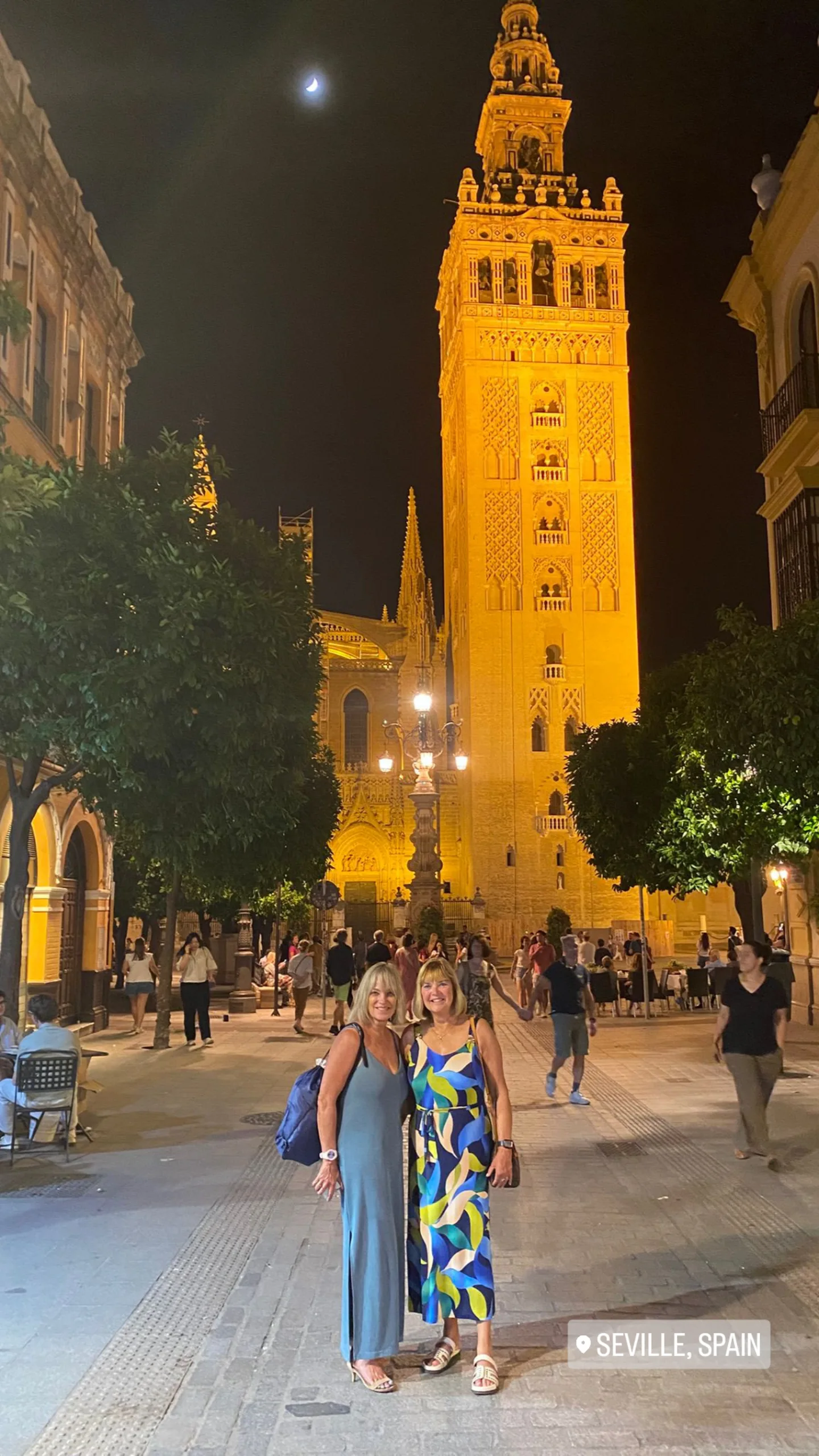
After a quick shower, I grab an Uber. We have reservations at La Azotea, right next to the Cathedral. It’s a beautiful night, and we have a table outside. A glass of rosé, croquetas de pato, gambas al ajillo, a tuna taco for Monique, gazpacho and pork ribs for Jos — and just like that, all is well again. After dinner we stroll back past the Cathedral, glowing beautifully in the night.


Bike Tour Sevilla
Friday morning, I walk back to the old town for a Dutch bike tour we’ve booked. The meeting point is the Plaza de Santa Cruz. Good thing I left early — Google Maps gets confused and sends me on a wild goose chase through the cobblestone streets of the Santa Cruz neighborhood. I eventually find it.
Our guide, Erik (with a K, not a C), is already there with one other couple. He’s lived in Sevilla for eight years and clearly loves what he does. By the time we’re all assembled, there are 15 of us. We collect our bikes, leave the plaza, and stop at a nearby park to get our bearings.
Universidad & Hotel Alfonso XIII
Our first stop is the Universidad de Sevilla — I already know the story from yesterday. Next door is Hotel Alfonso XIII, also built for the 1929 World Expo. It’s a stunning building, and Erik tells us it’s open to the public and well worth a peek inside. He also shares a fun fact: the Dutch king stays here whenever he’s in Sevilla, ever since he met his wife here during the Spring Fair in 1999. I just discovered it’s a Marriott property — perhaps one day I’ll stay there too.

Plaza Triunfo
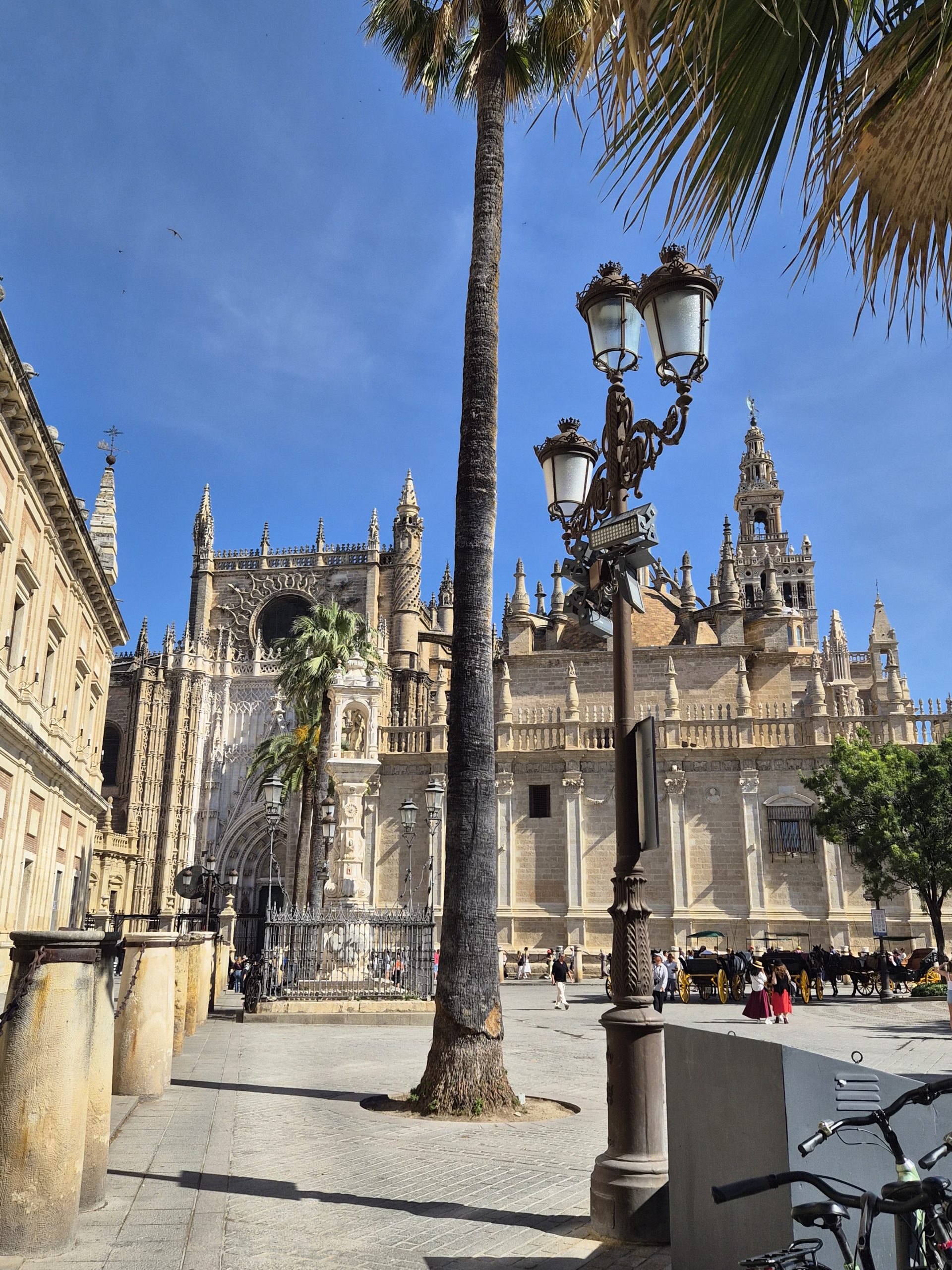
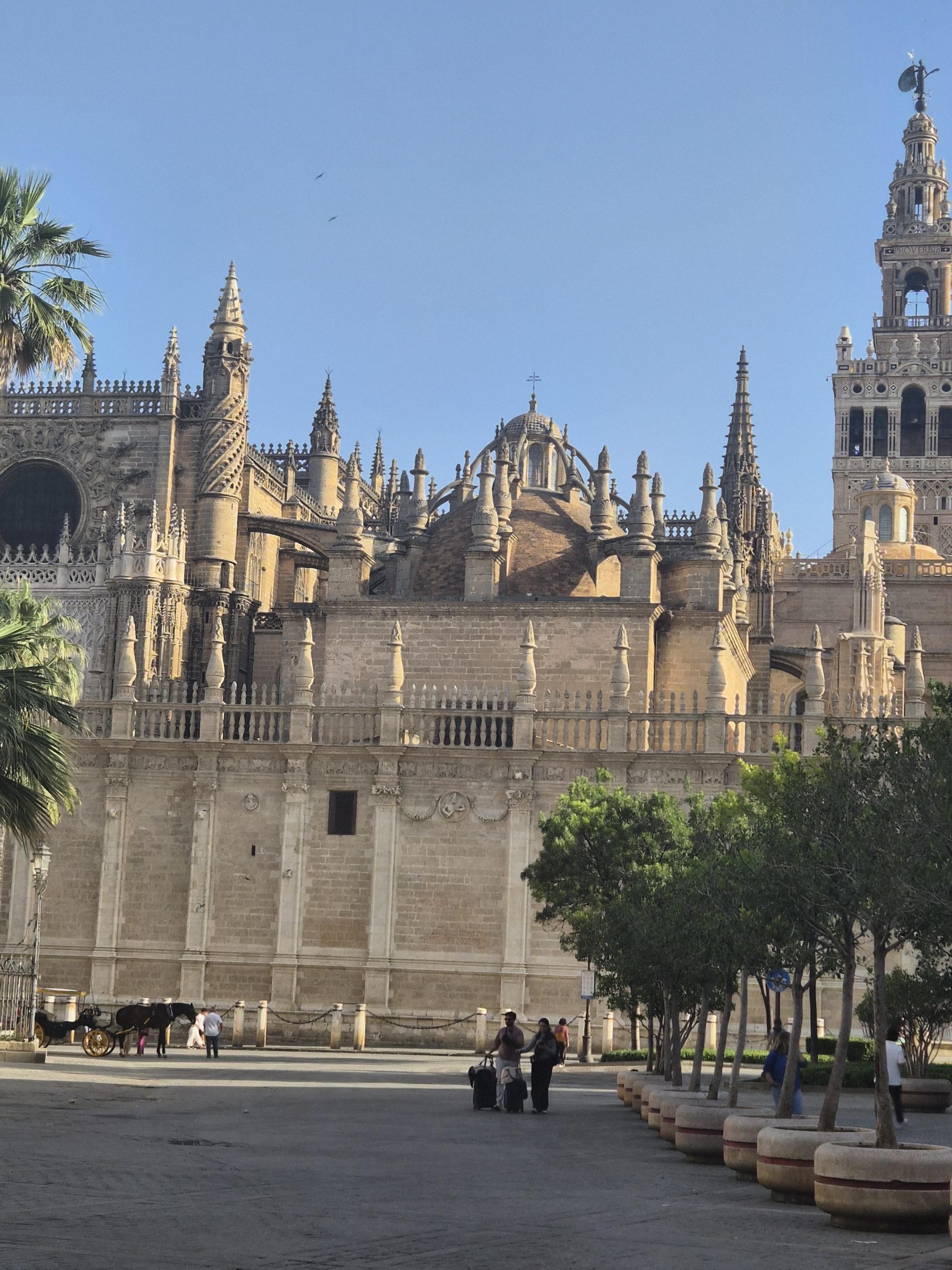
Our next stop is the Plaza Triunfo, named to commemorate the city’s survival of the 1755 earthquake, in which — remarkably — only nine people died. The square is flanked by three UNESCO World Heritage Sites: the Archivo General de Indias, the Alcázar, and the Catedral de Santa María de la Sede — the largest Gothic cathedral in the world. What makes it truly extraordinary is that it was built around an Almohad Mosque, a striking fusion of two religions and two civilizations.


Plaza de Toros de la Maestranza
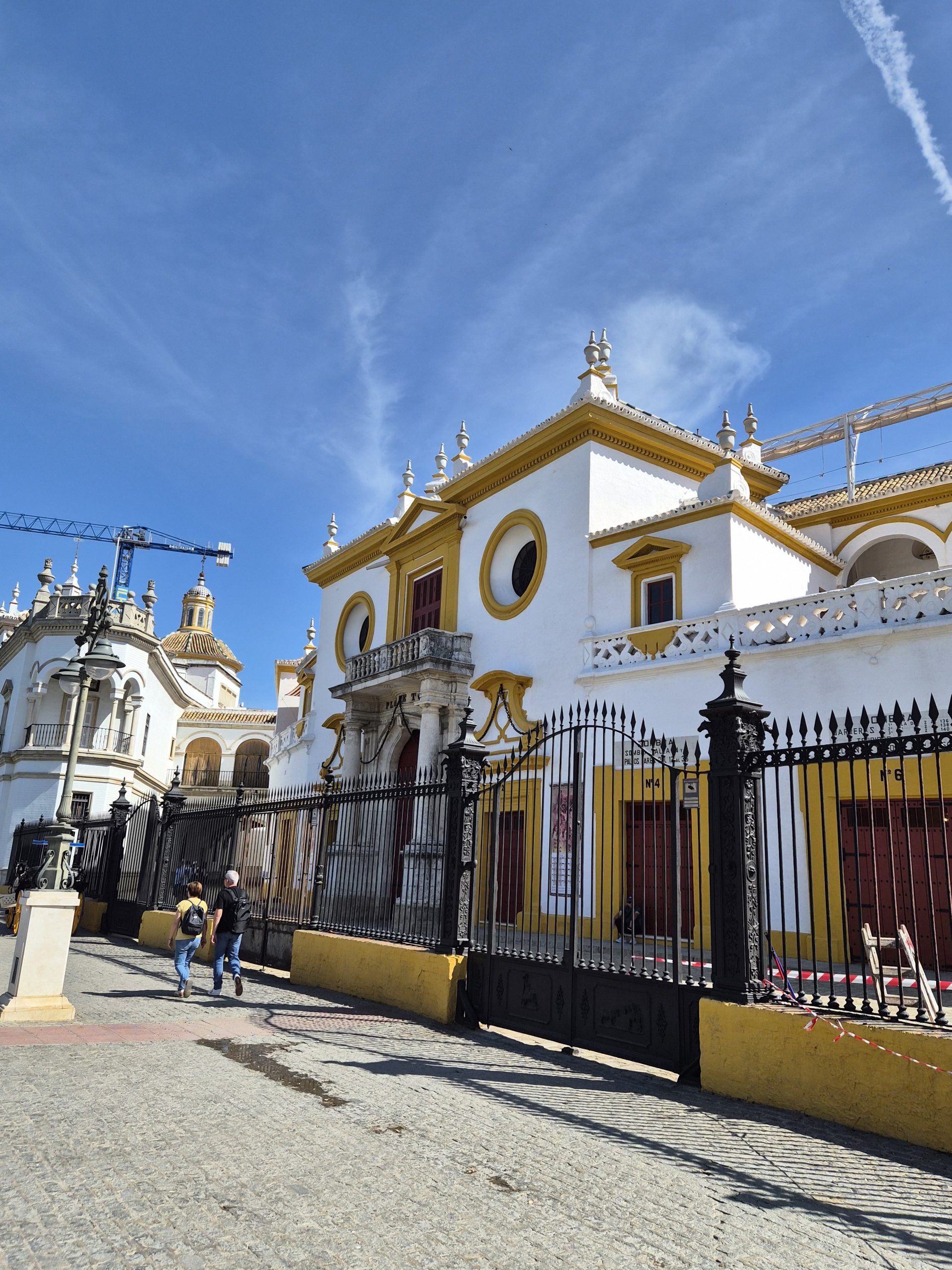
We ride on toward the river and stop at the famous bullring, the Plaza de Toros de la Maestranza. Erik acknowledges that some visitors prefer to skip this stop, viewing bullfighting as cruel. But it’s deeply woven into Spanish and Andalusian culture and history, and I think that’s reason enough not to look away — even if I have no desire to ever attend a fight. Erik explains that being a bullfighter is considered a great honor; children aspire from a young age to become a torero. The statues of celebrated fighters outside say everything about proud these men are and how much they are revered.
We continue on and make a brief stop at the replica of Christopher Columbus’s ship, the Nao Victoria.


Triana
We ride along the river beneath purple jacaranda trees in full bloom — one of my favorite trees, and one I’m lucky to have in my neighborhood in California and in the Algarve too. We cross the bridge over the Guadalquivir River and enter the Triana neighborhood. Back in January, Mandi and I had breakfast here at the Mercado de Triana, a beautiful food market built on the ruins of the Castillo de San Jorge,a medieval fortress and notorious headquarters and prison for the Spanish inquisition. However, since the early 19th century, it has been a vibrant hub for local ingredients and Andalusian flavors, with fun restaurants and local stores inside.


Parque María Luisa
We cross back over the river and stop for a well-deserved cold drink before biking through the gorgeous Parque María Luisa. This whole area was the site of the 1929 World Expo, and it shows: beautiful buildings dot the park, including the Archaeological Museum on Plaza de las Américas, the Argentine Pavilion, the Mudéjar Pavilion, the Isla de los Patos (duck island), and of course Plaza España. We stop for photos at the lily pond in front of the Mudéjar Pavilion, among the jacaranda and bougainvillea, and finally at Plaza España itself.


More than three hours after we set off, we return our bikes and thank Erik, who turns out to be a wonderful guide with deep local knowledge and plenty of personal stories. I’d recommend him highly, especially for Dutch-speaking visitors. We’re more than ready to collapse at a terrace café nearby for lunch and a cold drink.
Best Restaurants in Sevilla: Where to Eat Near the Cathedral
After a relaxing afternoon at the pool — and no malfunctioning elevators this time — I walk back to the old town for pre-dinner drinks. We find a table across from the previous night’s restaurant: a gin and tonic for Jos, sangria for Monique and me. While we’re sitting there, a procession of children winds past — it’s the Friday before Pentecost, and Sevilla, deeply Catholic, is honoring an old tradition.
Dinner is at Morante, on the other side of the Cathedral. The interior is gorgeous, but it’s another warm evening and we’re happy to sit outside. We start with a local Albariño white wine alongside two cheeses — a Manchego and an Idiazábal Ahumado — and a plate of jamón ibérico. For the main, all three of us go for the Solomillo de Vaca con salsa de foie: steak with a foie gras sauce, served with crispy fries and a spicy aioli (we opt for plain mayonnaise instead). Another good night, with good food and good wine.

Real Alcázar
The Palace
Saturday morning, I leave the hotel early. I’ve booked the first tour at the Real Alcázar at 9:30 but want to be in line by 9 — hoping to get ahead of the crowds. It works. I’m among the first people through the gates.
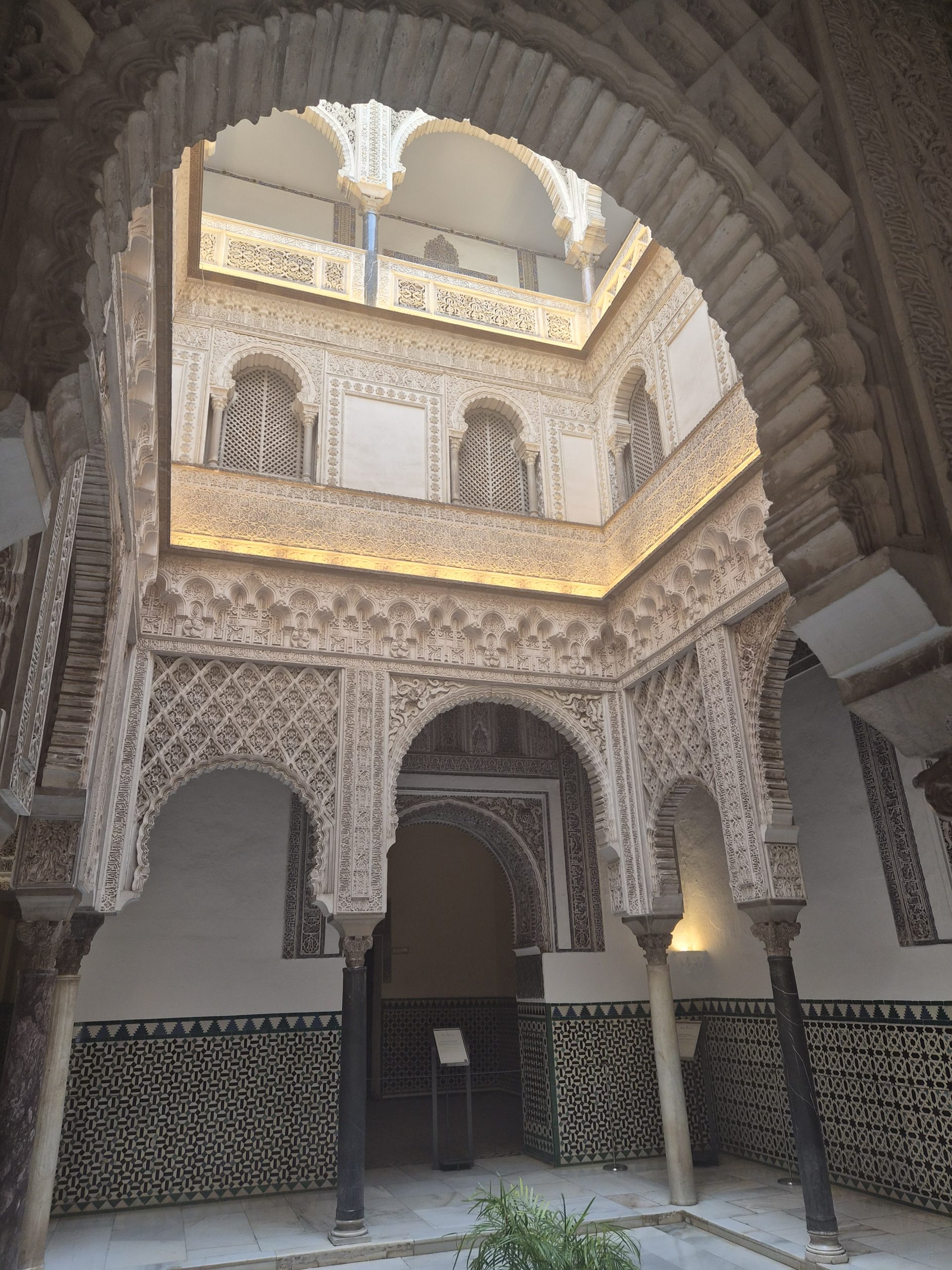
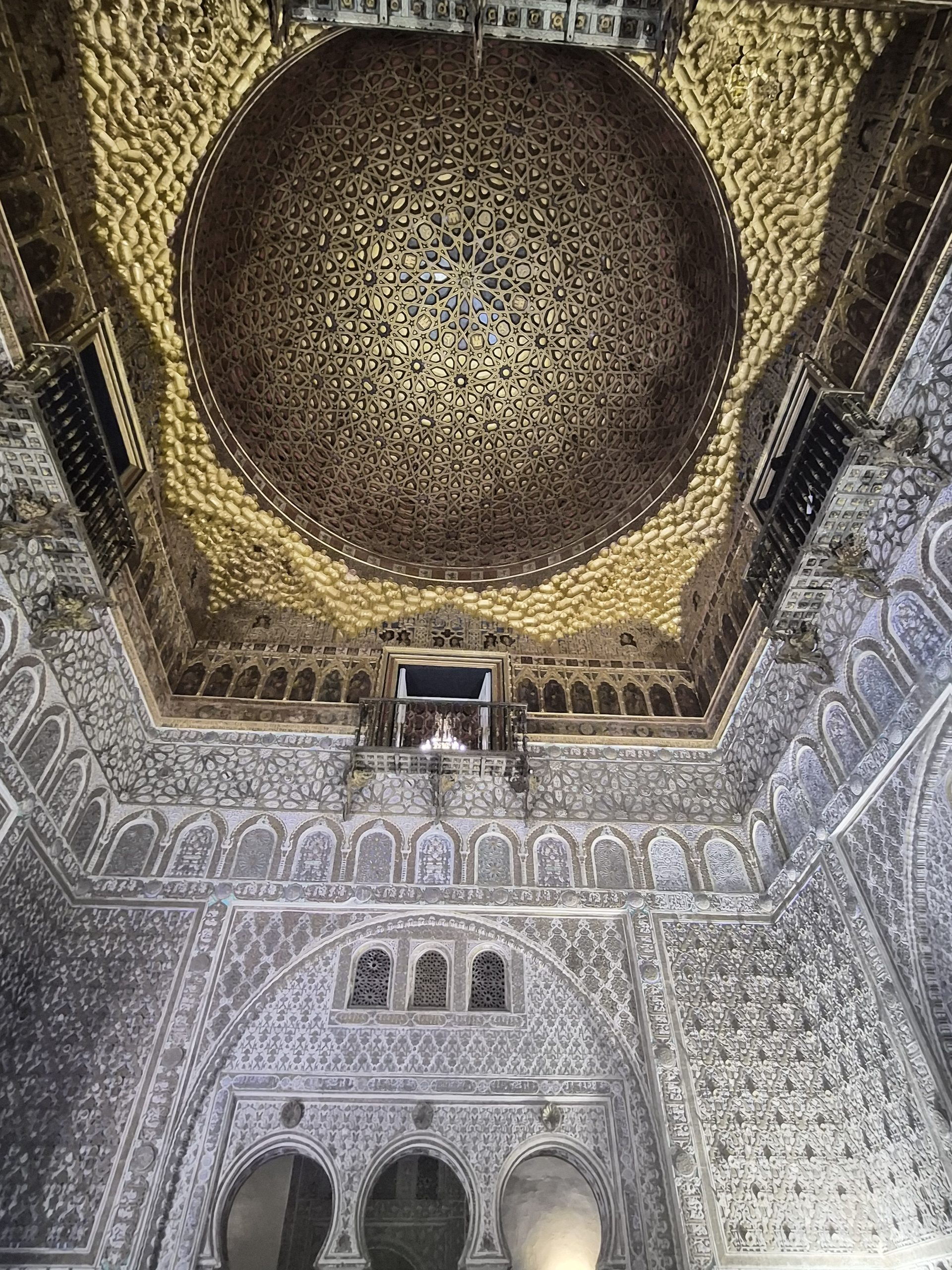
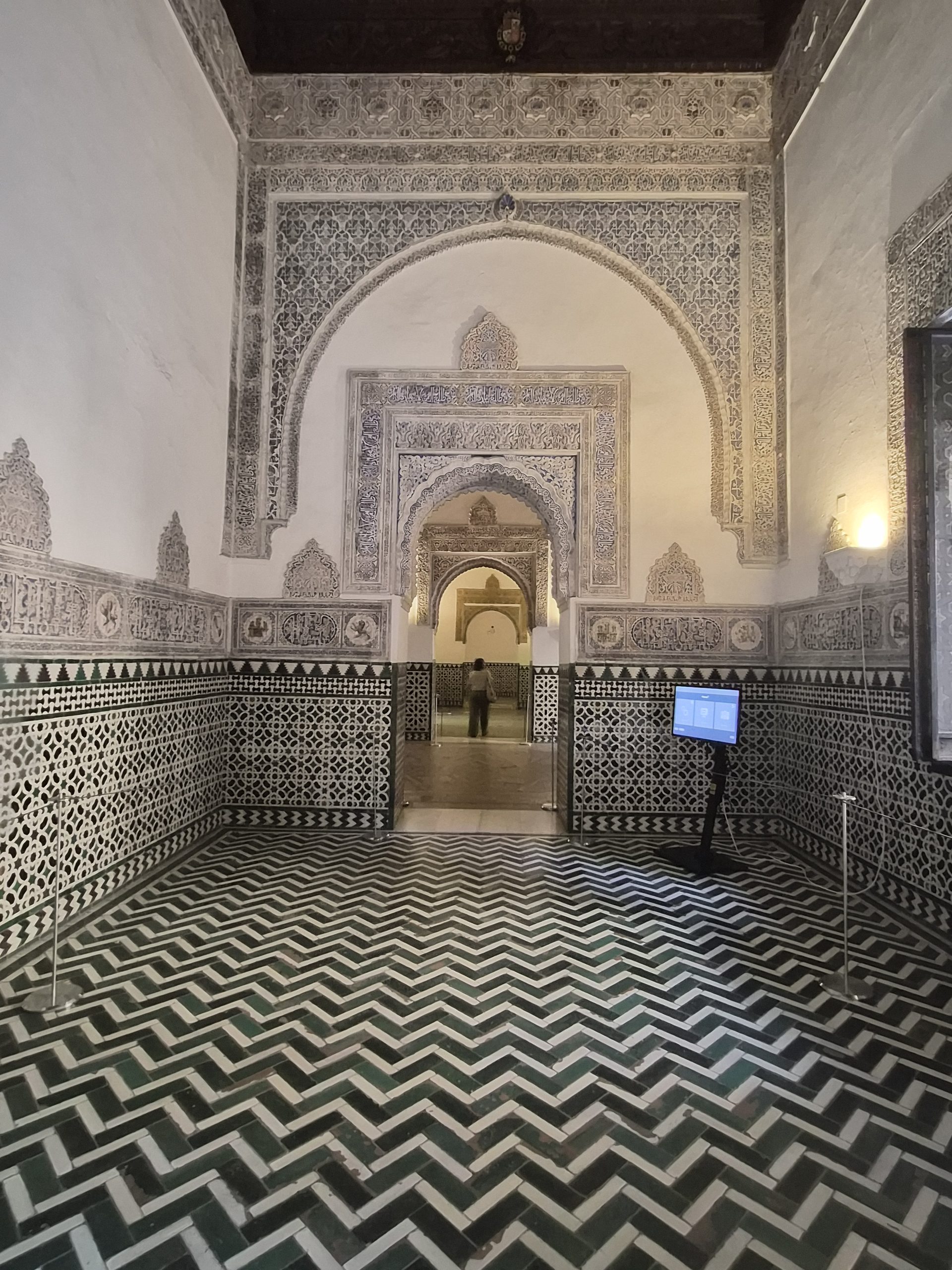
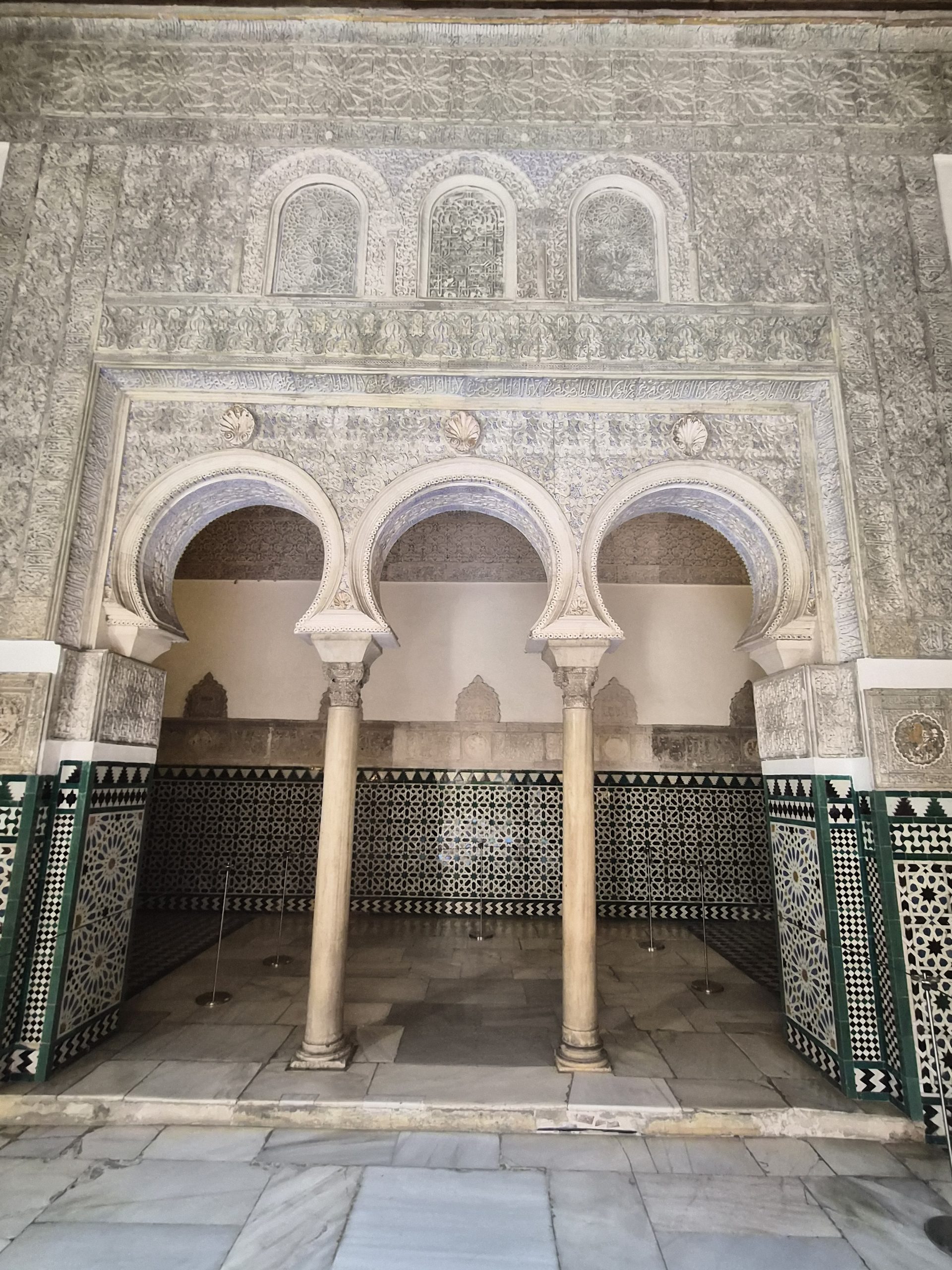
I follow the map toward the Cuarto Real Alto, which is where Isabel’s quarters are located — only to discover I need an additional ticket for that section. I try to talk myself into it, but the guard is not playing nice. A reason to come back, I suppose. From there I make my way to the main section of the palace, the Palacio del Rey Don Pedro. The architecture is breathtaking, especially the hand-painted azulejo tiles that cover nearly every surface. The palace is a dazzling fusion of Moorish, Mudéjar, and Renaissance styles — all the more remarkable for the fact that the Spanish king still resides here when he’s in town.
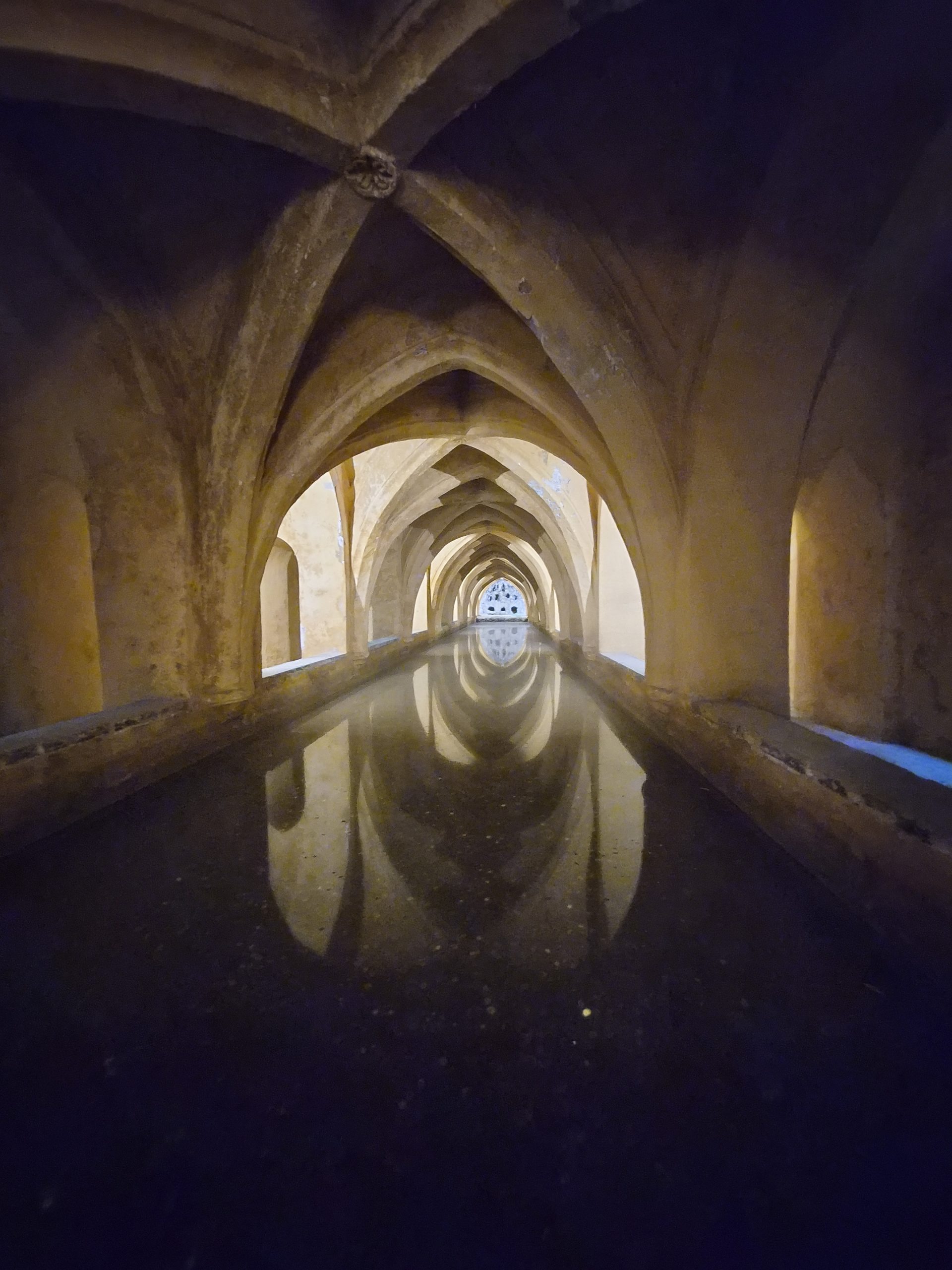
I wander through the Palacio Gótico and the beautiful Baños de María de Padilla before heading out to the gardens.


The gardens
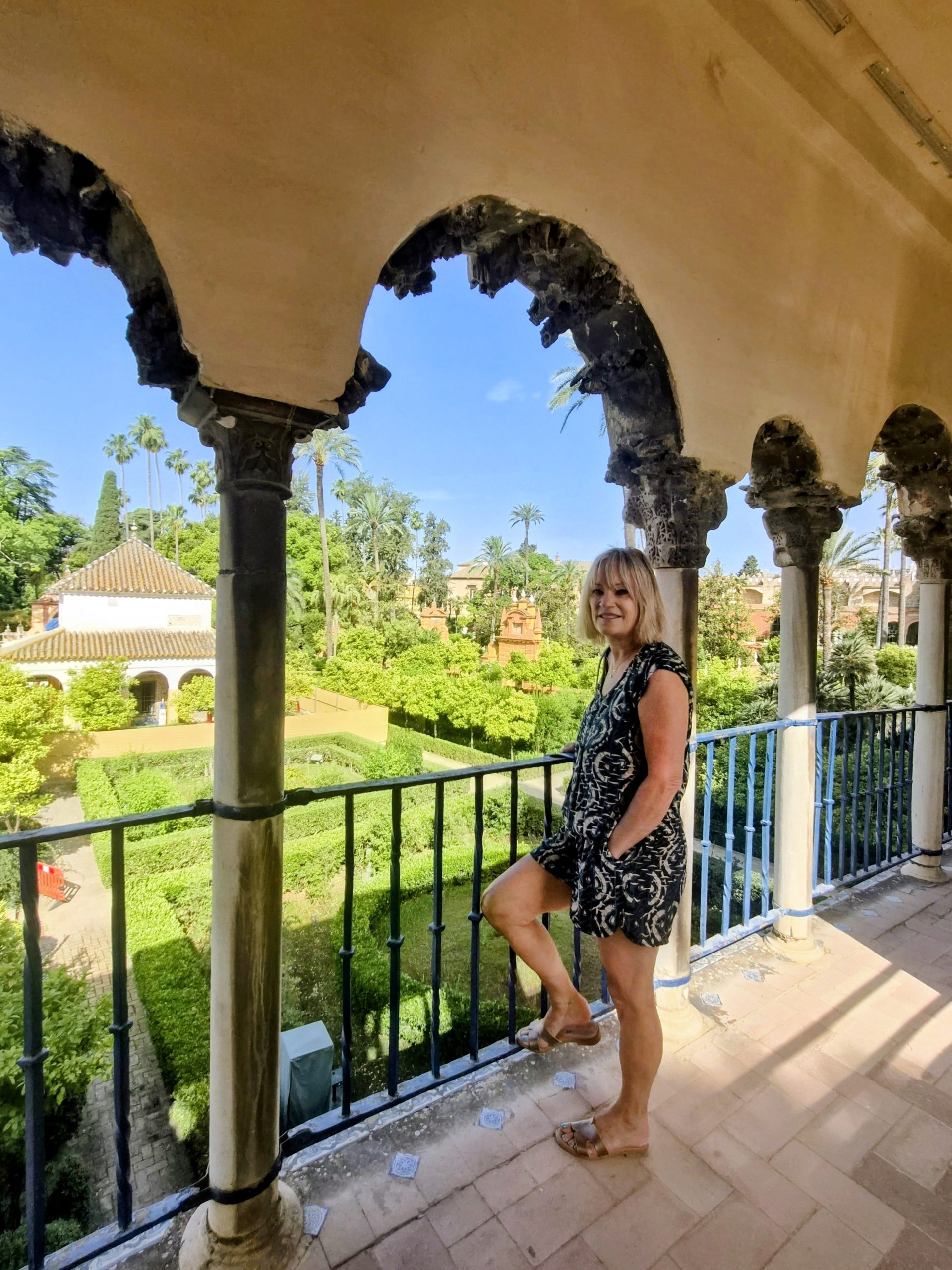
As much as I loved the palace, it’s the gardens that steal the show. Calling them a “garden” feels like an understatement — it’s a vast, sprawling park with multiple distinct sections, more than twice the size of the palace itself.
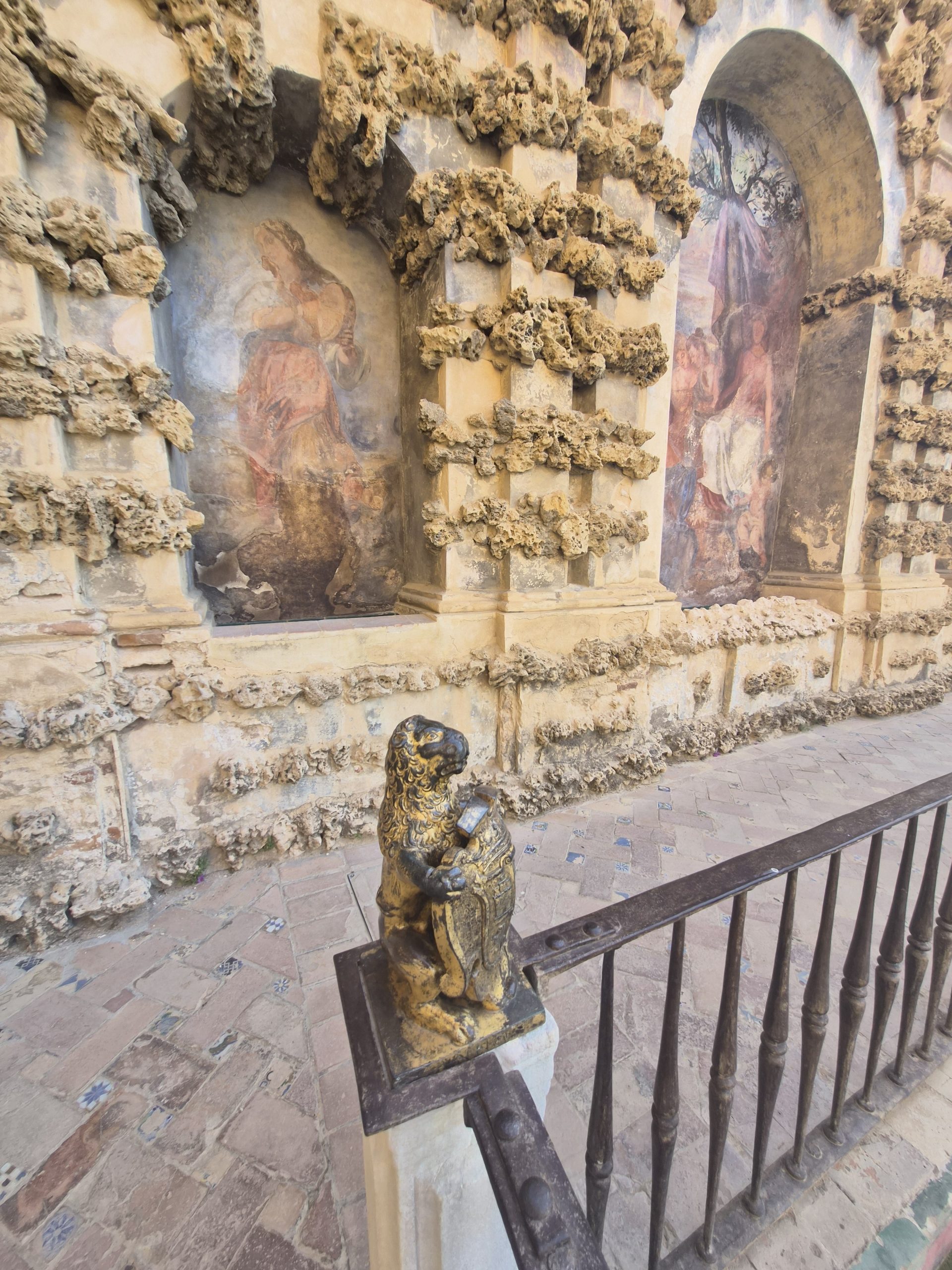
I begin at the Galería de Grutesco, a long rustic arcade wall you can actually walk along the top of. I climb the stairs and make my way to the end, pausing a few times for photos.


From there, I wander past ponds, fountains, and statues, through trees and flowers in full bloom. It’s magnificent — and I already know I’ll be back for another visit to Sevilla, to eat, wander, repeat.


